
There are many reasons why 1978 is considered a strange year in history. Among other things, this was the time the first “test tube” baby was created. Jim Jones also convinced his 900 parish members to ingest poisoned Kool-Aid. However, we daresay that nothing could beat the story of a Soviet scientist who stuck his head inside a particle accelerator. It was a moment that sent the scientific community into a frenzy. So what exactly happened?

This Is What Happens When You Stick Your Head Into A Particle Accelerator
What A Particle Accelerator Is
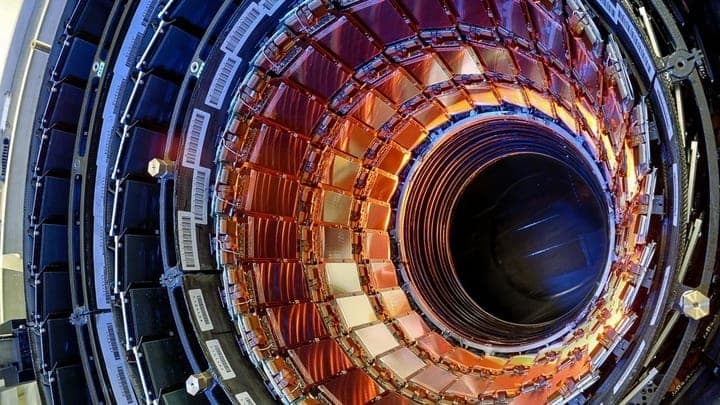
Let us start with an explanation of what a particle accelerator is. This is a machine that shoots particles at incredibly fast speeds. Its main focus is to glean exactly what happens when you isolate the way physics works on a minuscule scale. As an example, it is much easier to understand the mechanics behind an apple falling than observing what happens to a particle in the same position. Therefore, a particle accelerator aims to provide us with a way to study things at diminutive levels. However, what would happen when a person receives a dose of these tiny particles? This is a difficult question to answer for several reasons. Among other things, it is both unethical and unusual to use humans in such experiments.
What A Particle Accelerator Is
A Question Of Ethics
It is no secret that the history of science has been riddled with mistakes. There was a time when it was believed that leeches could cure everything, lobotomies solved mental illnesses, and alcohol would cause the inhabitation of spirits. Of course, we now know these are all untrue. Mistakes like these have added to the many ethical problems in science. However, we would like to focus on the problem of human testing. We have learned that it is not very wise to use humans as test subjects. In other words, we should try remedies and cures on animals as they do not feel the same level of pain that we do.

A Question Of Ethics
An Accidental Experiment
This is the reason why a situation like this was never expected. Although Soviet Russia is replete with its own scientific malpractice over the years, even they would not have approved of the act of shoving someone’s head right inside a particle accelerator. You would think otherwise when you know that Lysenko should be held responsible for the massive famine across the union, but such an experiment is way too dangerous. This is made even clearer upon the realization that humans will experience concrete damage from being hit by the speedy particles. When you look at natural experiments, it is easy to see why everyone is so curious what came of this extraordinarily unfortunate man.

An Accidental Experiment
Unbelievably Speedy Particles
Particle accelerators shoot particles at incredible speeds – if you want the specifics, they are 99.994 percent that of the speed of light. Basically, this means it sends the particles at 670,576,392 miles an hour. It doesn’t take a genius to figure out that this is incredibly fast. Of course, state-of-the-art technology is important here. Below, you are looking at the particle accelerator. The purpose of multiple accelerators is to provide different capacities that then allow these particles to come even closer to the speed of light. In other words, they allow humans to inspect the physics of the so-called unknown. This is how they have discovered things such as the Higgs Boson particle.

Unbelievably Speedy Particles
Collision of Particles
When a thing of significant mass travels near such a speed, you cannot expect a good outcome for whatever it comes into contact with. It is not unusual to expect a catastrophic explosion to happen after the collision. Let us take a look at several examples of things like this to understand the severity of the situation. Let us look at a handful of examples that will give us a deeper understanding of what the Soviet scientist went through. First of all, there are things such as asteroids that make an impact. This is primarily because they are large and made of dense and heavy materials. Something of this size will not need the same amount of speed or energy to cause a lot of damage. However, the mass can’t be all that smaller when you increase the speed to achieve the same kind of damage.

Collision of Particles
Oh My God
You will be fascinated when you learn why they dubbed the Oh-My-God particle by its name. The fast-flying spec earned its moniker because that was the reaction of the physicists who discovered it! It came with around 100 quintillion times the energy you will find in a regular photon. In order for this particle to travel so fast, it needs to be very tiny. This is why the particle did not cause much damage – it was tiny enough to avoid contact with anything. If it did, the explosion’s magnitude would be equivalent to a baseball thrown lazily. However, what would happen if it collided with something like human flesh?

Oh My God
The Best Back In The Day
The amount of damage you should expect from a particle accelerator depends on a couple of things. First of all, you need to consider the speed of the particle. The faster it is moving, the greater the damage. The Synchrotron U-70, the very same one our Soviet scientist put his head inside, was not actually the most powerful of its kind. However, it certainly was at the time it happened. The accelerator had the ability to send the particles at a greater energy than other accelerators in other parts of the globe. It was built in 1967 and could travel at nearly the same speed that light travels.

The Best Back In The Day
Another Day At Work
During that fateful day, Anatoli Petrovich Bugorski was on duty at the Institute for High Energy Physics. During his shift, the Synchrotron U-70 suddenly stopped working – or so they thought. There was a part of the long piece of equipment that made the accelerator start malfunctioning, and Burgorski volunteered to inspect what was going on. The machine was equipped with certain safety mechanisms that will halt the proton beam inside as soon as someone goes inside the steely chambers of the machine. Unfortunately, they did not work in this situation. That was why Bugorski popped his head into the accelerator while it was still shooting heavy protons at head-spinning speeds!

Another Day At Work
Brighter Than A Thousand Suns
As expected, Bugorski could not believe what he saw. Initially, he saw light that he has since described to be “light brighter than a thousand suns.” In reality, this was the proton entering the surface of his face and coming through the other side. Although we discussed the improbability of a particle this size colliding with human bone and flesh, we have not talked about the nature of the radiation they make. Protons that have sufficient energy to travel close to the speed of light behave like the byproduct of large amounts of radiation. Such radiation is equivalent to what you would find in an x-ray but powerful by magnitudes. When you get an x-ray, it will be around five grays of radiation, whereas you will get two to three thousand in a particle accelerator!

Brighter Than A Thousand Suns
The Effects Of Radiation Exposure
So, we now have a different question: what is the result when one is struck with radiation? We know the answer to this question. Among other things, you will likely contract radiation sickness as a result of exposure to a large amount of radiation in a short period of time. This will not be a pleasant experience whatsoever. Too much radiation exposure comes with burns, fatigue, nausea, and vomiting. Apparently, it is common knowledge in the field that .75 grays of radiation exposure will result in your death. It is also known that exposure of this kind will be equivalent to around 18,000 x-rays! Clearly, we do not recommend finding this out for yourself.

The Effects Of Radiation Exposure
Too Much Radiation
If you want to know how much radiation exposure is excessive, let us just say that any amount of radiation is already too much. It will only take a couple of mutated cells to create tumors. However, excessive radiation can lead to far worse things. If you want to find out how radioactive an object is, the answer will come in grays. In a typical x-ray, you will experience an amount of 0.00001 gray. Obviously, this is a minuscule amount. A CT scan is a little higher with the amount of 0.01 gray. However, the victims of a nuclear fallout such as that in Nagasaki and Hiroshima during the Second World War will receive 2 to 50 grays. We hope this is enough to give you a perspective on the severity of 3000 grays from a particle accelerator.

Too Much Radiation
What Happens With Localized Exposure
When a small section of the skin is subject to a blast of something like 15 to 20 gray, the skin will act in a disconcerting way. First off, you’ll experience something like a burn—swelling, redness, and itchiness will ensue. After about a week or so, the affected region will lose all of its hair. At about the third week, the exposed area will begin to experience skin sloughing (i.e., peeling). When you experience something like 50 grays, the affected area will suffer far more quickly. You will, in other words, experience burning right away. And from there, blistering will occur.

What Happens With Localized Exposure
What Acute Radiation Syndrome Is
Acute radiation syndrome is what you will get when you have a full body exposure to 2 grays of radiation. When you suffer through this, you will experience four waves: prodrome, latent, illness, and recovery. The extent of each phase is only determined by the amount of radiation exposure you received. It is interesting to hear that it only takes 3.5 grays if you want to kill half the population through full body radiation. However, acute exposure of a much higher caliber is not quite as disconcerting as you would think. Acute exposure might not bring about organ failure and an assortment of ailments that lead to death when it comes to radiation sickness.

What Acute Radiation Syndrome Is
This Is What Happens
When you do get radiation sickness, keep in mind that the effects are generally unpleasant. The first thing that happens would be the rapid division of cells in the intestines and the death of bone marrow. This is known as the prodromal phase. This is when you experience things similar to flu symptoms such as diarrhea, fatigue, fever, sweating, and vomiting. We feel sorry for everyone who goes through this. A more severe full body exposure, somewhere like 20 to 30 grays, will immediately lower the blood pressure and induce “explosive diarrhea”. It becomes more and more painful until death comes for the victim. However, what will happen with narrowly focused but more intense exposure?

This Is What Happens
Back And Front Of His Head
The proton beam that passed Bugorski’s skull entered through the back and left through the nose. As you might imagine, he felt a burning sensation right away. Aside from that, the area on the back of the skull immediately lost all the hair on it. The same goes for the area where it exited. His face started to rapidly swell after the exposure as well. This is actually fairly common when one suffers an excessive dose of radiation. For Bugorski, his face was exposed to so much radiation it became so unrecognizably swollen. After this, he was rushed to a hospital to get medical assistance.

Back And Front Of His Head
Expectation Of Death
When a person is exposed to radiation of this level, there is a very small chance of survival. This was the reason everyone did not expect him to live for long. However, it is also important to remember that this was the first case of proton beam radiation exposure. There was still a chance he would make it. In the following days, the skin on his face that was exposed to the radiation peeled back and fell off. Essentially, Bugowski was experiencing extreme burning. This was not limited to the exterior as the inside of the skull was going through the same thing as it spread through the cerebral tissues. Doesn’t that sound incredibly painful?

Expectation Of Death
He Still Finished His Ph.D.
It was nothing short of a miracle that Bugorski did not die. He somehow managed to live through everything. However, he experienced an array of problems that considerably depreciated the quality of his life. The list includes all sorts of conditions like a loss of hearing in one ear, partial paralysis, and fatigue that extended from his mind to his body. It would not be wrong to assume that the damage was brought about by the photon beam radiation spreading into the cerebral tissue. It was not enough to damage his brain and keep him from finishing his Ph.D. program, although he had to deal with other problems like seizures.

He Still Finished His Ph.D.
Suffering A Seizure
After a couple of years, Bugorski started to develop a seizure that we rarely see. It is called the tonic-clonic seizure, which is something that is present in only 10 percent of people with epilepsy. It normally unfolds after hyperactivity in a localized region in the brain. It is the overactivity that causes the seizure. Normally, they occur on a single side of the brain. However, Bugoski got it after being hit by the particle beam, which is why the radiation he experienced damaged all the surrounding regions that it made contact with. Apart from seizures, he also suffered a case of partial youth.

Suffering A Seizure
Partial Paralysis
Bugorski felt the side of his face where the light passed through go into paralysis. This is the same side of the face that, for whatever reason, looks even more youthful than its counterpart. The reason behind this is that the destruction of the muscle and nerve fibers gave him the same effects that Botox would give. If you want to experiment with physics and beauty, it might be worth it to consider sticking your head into a functioning particle accelerator. We are only kidding, of course. We really do not think that it is worth suffering through the equivalent of 18,000 x-rays to maintain your youthful appearance forever.

Partial Paralysis
Other Effects
Another side effect of radiation exposure is the death and decay of the cells through which the beam passed through. This does not happen right away but after a couple of weeks following the exposure. When it happens, you can expect some serious side effects such as boils and burns in the affected area. After some time passes, deterioration will start in the red, itchy, and swollen areas. The cells that make up the tissue and flesh will begin to degenerate, which will then lead to the development of ulcers, sores, and other unseemly conditions. Another common consequence is what they call nuclear acne, which is basically rotten flesh residue pustules.

Other Effects
Alpha Particles
It is also important to consider the type of radiation you were subjected to if you want to accurately determine the damage to come. There are particles that will indicate the caliber and severity of the aftermath your body will go through. Alpha particles are some of the milder (but still terrible) kinds of radiation one can experience. They are weak whenever they travel, which is why they are generally easy to deflect. Even something as thin as a sheet of paper can be enough to ward them off and stop them from entering your skin. If they are going to do serious damage, you will have to ingest them.

Alpha Particles
Beta Particles
Meanwhile, beta particles are somewhat more intense when you consider what will happen after the exposure. For the most part, they are very small and such a diminutive nature allows them the ability to penetrate the skin better. With radiation, the main thing you need to worry about is penetration. Layering up is the key here! Clothing can protect you to a certain extent. Upon contact with the skin, one should expect itchiness, red splotches, and some swelling. With ample time, the part of the skin exposed to these particles will result in the death of your cells. Do we need to explain why this is bad?

Beta Particles
Gamma Rays And Neutrinos
If you want to know what the most dangerous particles for humans to encounter are, they would be neutrinos and gamma rays. If you want to prevent these from penetrating the skin, lead protection is necessary. Most people will not be equipped during the time of exposure, so there are many side effects to come. When you are hit by these particles, they will enter up to a couple of centimeters into your skin and cause irritation all over the body. With sufficient exposure, the result would be radiation poisoning and even death. Now, let us go back to the story and figure out which of these particles Bugorski had to deal with.

Gamma Rays And Neutrinos
What You Can Do
However, there are certain things you can do to alleviate the damage acute radiation poisoning can bring. For one thing, you can replace the blood affected in order to improve the white blood cell count and restore the immune system to its operational functions. There is also a good chance that you will be given antibiotics and hooked to breathing machines. When you are placed on assisted living, you generally reduce the amount of work your body needs to deliver its daily duties. When this happens, you are making it easier for the body to concentrate on the act of recovery. This is a way to try and recover from the damage radiation exposure caused.

What You Can Do
Cell Death
The process of cell death is known as apoptosis. Essentially, this is what will happen when the DNA of the cells has been compromised. You can think of it as the cells committing suicide. It happens in a distinct way, which is how the process got its name. In Greek, apo means “off” and ptosis means “falling”. After being compromised, the cells fall into tiny pieces and eventually degenerate. The results of the process would be the recycling of the cellular remains to be used by the other body cells. If enough cellular decomposition happens, the result is generally unfavorable. Cellular rot, necrosis, and other unseemly conditions often result from the burns and the other side effects.

Cell Death
Cancer Treatment
There are times when radiation is used to treat different forms of cancer instead of breeding them. This is actually what proton therapy aims to do. During the process, a tiny beam of protons is going to be directed at an acute body part. It will then destroy, in the same manner we have previously discussed, the region where the beam is pointed at. When the area is destroyed, cancerous cells are killed alongside it. Like we have previously mentioned, radiation first targets the cells that replicate quickly when it takes hold. In general, they also happen to be the most cancerous ones, so do not be surprised to find that proton therapy is often a part of cancer treatment.

Cancer Treatment
Not Looking So Good
Many of the medical professionals were under the impression that Mr. Bugorski was going to meet his end. He was exposed to an incredible amount of radiation that exceeded the normal threshold, so they knew he had a very low chance of survival. However, this was only the diagnosis on the superficial level. The pathway where the particle penetrated and then left his brain had been small, which was why the total radiation he actually experienced had been minimal. Although the amount he experienced was enough to cause serious damage to the exposed areas, they were highly localized. Keep in mind that it would take near global radiation exposure for it to be fatal.

Not Looking So Good
Doing Just Fine
As of the time of writing, Bugorski is still alive. Several decades have passed since the accident, but he is doing just fine. He is now in his 70s, married, and completely cancer-free. If you ever have to get hit by a small stream of radiation, you should pray that it will be contained and narrow. Otherwise, you will not have the luck Bugorski had. Do you want to know what it would have been like had he not been so fortunate? The answer involves full-body shutdown, severe burns, organ failure, and death. That does not sound pleasant at all, does it? If you want a long and healthy life, we highly recommend keeping your head out of particle accelerators.

Doing Just Fine
In The Long Run
Even if you do not get hit with such high amounts of radiation, know that moderate amounts can result in a higher risk of long-time exposure. This is the issue with most of the radiation we experience in our daily lives. Radiation of this kind increases the chances of mutating cells and inducing them to neglect the signs of normal cellular replication. Should this ever befall you, the cell will likely commence a runaway replication spree of sorts. The replicating cells, if untreated in time, will eventually turn into a form of cancer. This is something that everyone should do their best to avoid. It is certainly incredible that Bugorski did not end up with the ailment. Perhaps this has something to do with the fact that brain cells do not replicate.

In The Long Run
Word Of Advice
In conclusion, you should never pop your head into an operational particle accelerator. It might be a good idea to stay away from one thought to be broken! Otherwise, prepare to be hit with an unbelievably high dose of radiation. Mr. Bugorski simply got lucky it was concentrated into a tiny area. Losing hearing will be the least of your worries when it comes to the consequences. You can also suffer far more than just a singe or burn. We bet that you, like us, value your safety and health so make sure to stay far, far away from particle accelerators!

Word Of Advice